Once you have approved a furnace replacement, a clear installation plan can make the day feel much more manageable. You should know where the crew will work, what may interrupt your routine, how the new system will be tested and what information you will receive before the job is complete.
Many straightforward furnace replacements can be completed in one day, but that is not a promise for every home. Venting changes, electrical or gas work, duct modifications, equipment access and coordinated air-conditioning work can affect the schedule. Your written proposal should describe the anticipated scope and timing for your project.
Here is what homeowners in Park Ridge and the surrounding Chicagoland service area can expect before, during and after a professional furnace installation.
Before installation day: Confirm the project details
Review the final proposal rather than relying on memory from the estimate visit. Confirm:
- Furnace manufacturer and model number
- Heating capacity and efficiency rating
- Included thermostat or control changes
- Venting, gas, electrical or ductwork modifications
- Removal and disposal of the old equipment
- Permit or inspection responsibilities, where applicable
- Equipment, parts and labor warranty details
- Expected arrival window and project duration
- Payment or financing steps
ENERGY STAR recommends getting a written proposal that identifies project costs, model numbers, job schedule and warranty information. It also advises that equipment should be sized from a home evaluation—not simply chosen by copying the old furnace’s capacity.
NextGen’s furnace replacement and installation page outlines the home and system factors used to make an equipment recommendation. If you are still comparing bids, use the furnace replacement estimate checklist first.
How to prepare your home
You should not need to dismantle anything around the furnace. A few practical steps can help the crew move equipment and work safely:
- Clear an access path. Move boxes, shoes, furniture and fragile items between the entrance and equipment area. Include stairs and narrow turns.
- Create working space. Remove stored items around the furnace and nearby electrical panel. Ask the company how much clearance the crew needs.
- Plan for pets and children. Keep them away from open doors, tools and the work zone.
- Protect what matters. Tell the crew about delicate flooring, recently painted surfaces or access restrictions. Professional installers should use appropriate floor and property protection, but it helps to discuss concerns in advance.
- Make someone available. An adult should be able to answer questions and complete the final walkthrough. If the decision-maker cannot stay, confirm who may approve an unexpected scope change.
- Expect periods without heat. Ask for a realistic schedule, especially on a cold day. Never use an oven, grill or unvented combustion device to heat the home.
If parking, building access, association rules or a shared mechanical room could affect the crew, communicate that before the appointment.
What happens during furnace replacement?
1. Arrival and scope review
The lead installer should confirm the equipment and planned work, look over access and protect the route to the mechanical area. This is the time to point out thermostat concerns, rooms that have been uncomfortable or anything that changed since the estimate.
2. Safe shutdown and old-equipment removal
The crew shuts down electrical power and fuel according to the installation plan, disconnects the old furnace and removes it from the work area. Ask in advance whether disposal is included; it is listed as part of NextGen’s published installation process.
3. Connections and required modifications
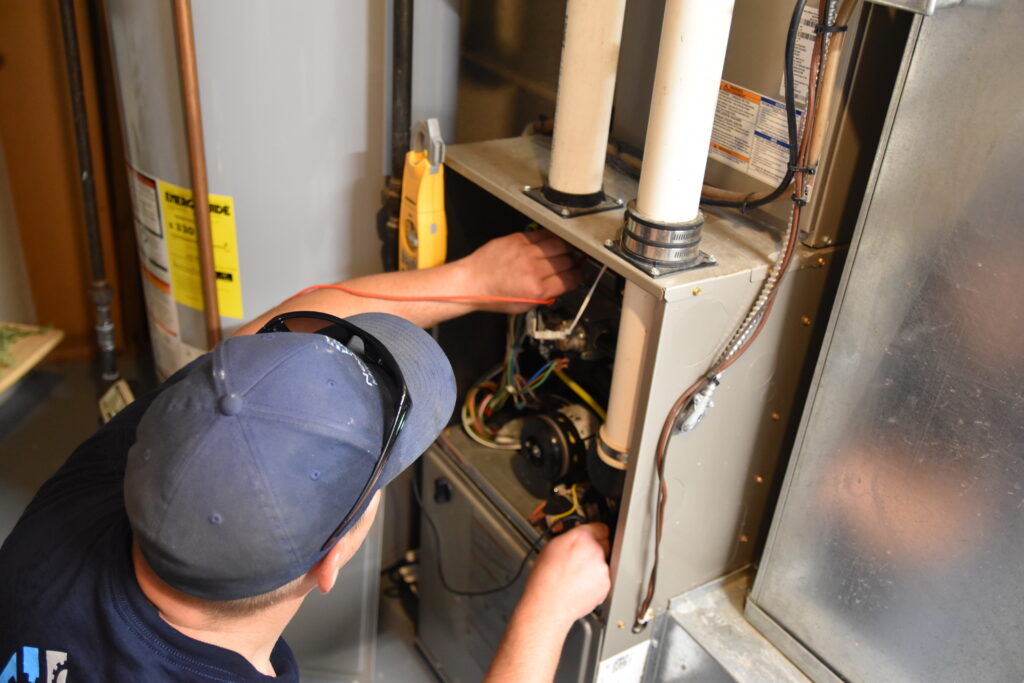
The new furnace is positioned and connected to the home’s ductwork, electrical supply, fuel source, thermostat and venting system as applicable. Some installations require transitions between the furnace and existing ductwork, a new venting arrangement, drainage for condensing equipment or other site-specific work.
Those details are why a home evaluation matters. ACCA’s Manual J is the nationally recognized standard for calculating residential heating and cooling loads; the old furnace’s label alone does not establish what the home needs today.
4. Startup, testing and adjustment
Installation is not complete when the furnace simply turns on. The crew should verify system operation and safety controls, thermostat response and airflow, then make appropriate setup adjustments for the selected equipment and home. NextGen’s live installation page states that its process includes testing the furnace, thermostat, airflow, safety controls and overall operation.
For fuel-burning equipment, the U.S. Consumer Product Safety Commission advises professional inspection of furnaces, flues and vents. Ask the installer what safety and operating checks were completed on your project.
5. Cleanup and homeowner walkthrough
Before the crew leaves, you should receive a practical tour of the new system. Learn how to operate the thermostat, locate and replace the filter, recognize normal sounds and know whom to contact if something seems wrong. Confirm that the old equipment and installation debris have been removed as agreed.
Questions to ask during the final walkthrough
- Where is the filter, which size does it use and how often should I check it?
- Which thermostat settings do you recommend for ordinary use?
- What sounds or operating behavior are normal for this model?
- What maintenance does the manufacturer require?
- Who registers the equipment warranty, and is there a deadline?
- Which documents should I keep?
- Were any changes made to the original scope?
- What should I do if the furnace does not operate as expected?
Do not leave warranty registration or maintenance requirements to assumption. Keep the proposal, model and serial numbers, installation record, manuals and warranty documents together.
What to watch during the first few days
A new system may sound and operate differently from the old one, particularly if it has multiple heating stages or a variable-speed blower. The thermostat may also have unfamiliar settings. The installer should explain those differences.
Contact the installer if the furnace repeatedly shuts down, produces an unfamiliar persistent odor, fails to hold the set temperature or leaves significant room-to-room comfort problems. Do not open or adjust combustion components yourself. If a carbon-monoxide alarm sounds, leave the home and call emergency services.
ENERGY STAR recommends annual pre-season professional checkups and regular filter inspection to support system performance. Ask when the first scheduled maintenance visit should occur and what documentation helps maintain the manufacturer warranty.
A good installation ends with informed ownership
The best furnace replacement experience is not just new equipment in the mechanical room. It is a system chosen for the home, installed to the agreed scope, tested, documented and explained clearly.
If you are planning a furnace replacement in Park Ridge or another community in NextGen Mechanical’s verified service area, request a free furnace replacement estimate or call 224-539-6895. Bring your comfort concerns and questions; they belong in the plan before installation day.
Frequently asked questions
How long does furnace replacement take?
Many standard replacements can be completed in one day. Venting, gas, electrical or ductwork changes, difficult access, permits or coordinated equipment work can add time. Ask for the project-specific schedule in writing.
Do I need to be home for furnace installation?
An adult should be available for access, questions and the final walkthrough. Confirm the company’s policy and who can approve any necessary scope change before the appointment.
Will the installer remove my old furnace?
NextGen’s published process says its team removes old equipment and related debris. Confirm that removal and disposal are included in your individual written proposal.
What paperwork should I receive?
Keep the signed proposal, model and serial numbers, warranty and registration information, owner manuals, invoices and any permit or inspection record relevant to the project.
Technician review requested before publication: Confirm NextGen’s actual arrival, floor-protection, permit, startup, commissioning and warranty-registration workflow. Replace general phrasing with documented company procedure only after operations confirms it. A real installation-day photo sequence could be added with homeowner permission; do not imply the stock or Drive images show a particular customer outcome.